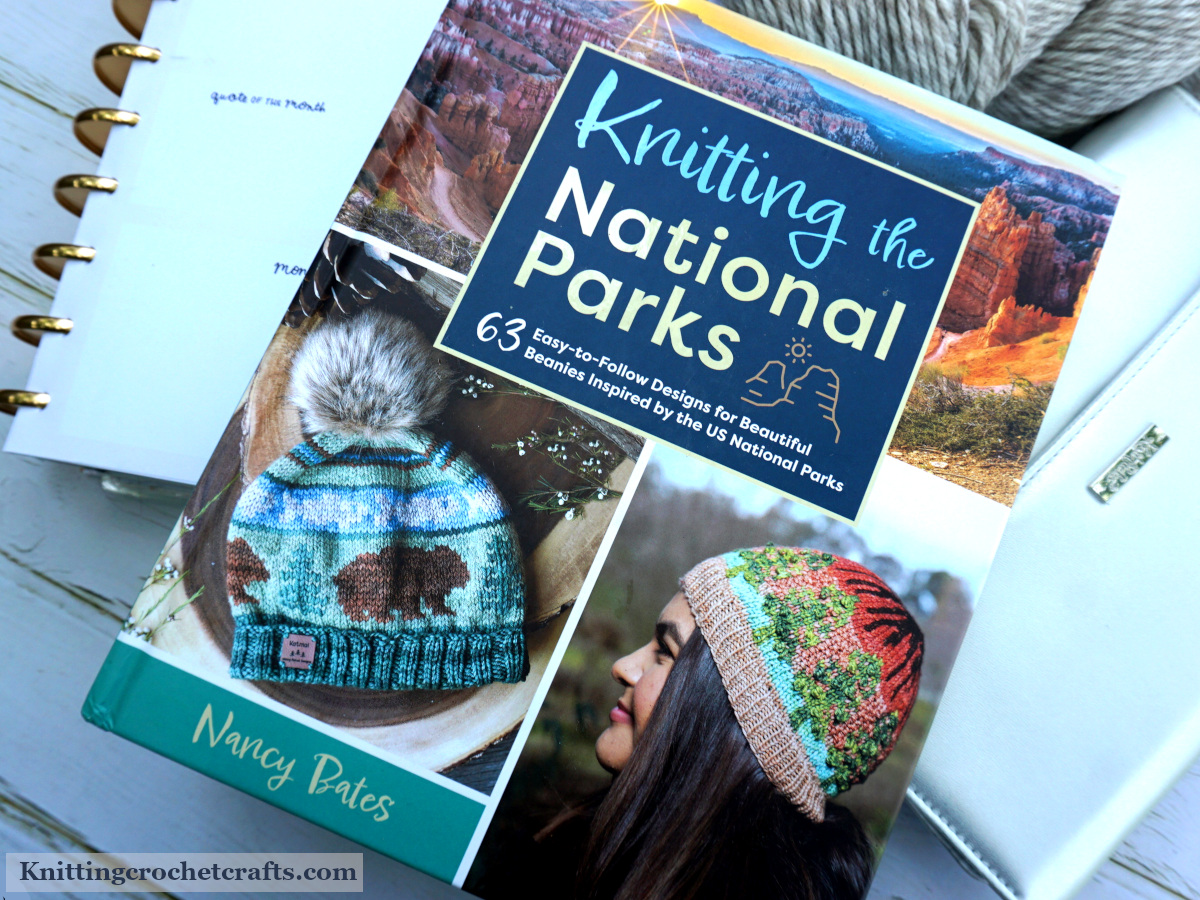
Are you interested in knitting stylish, on-trend beanies for yourself or anyone else? If so, there's a colorful, appealing knitting pattern book you'll want to take a look at. It's called Knitting the National Parks: 63 Easy-To-Follow Designs for Beautiful Beanies Inspired by the US National Parks.
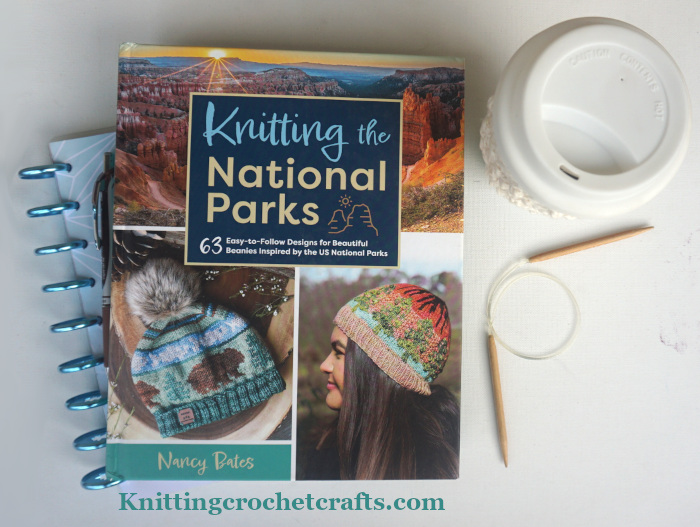
All the Details You Need to Know About Knitting the National Parks:
Author: Nancy Bates
Publisher: Weldon Owen, an Imprint of Insight Editions
Copyright Date: 2022
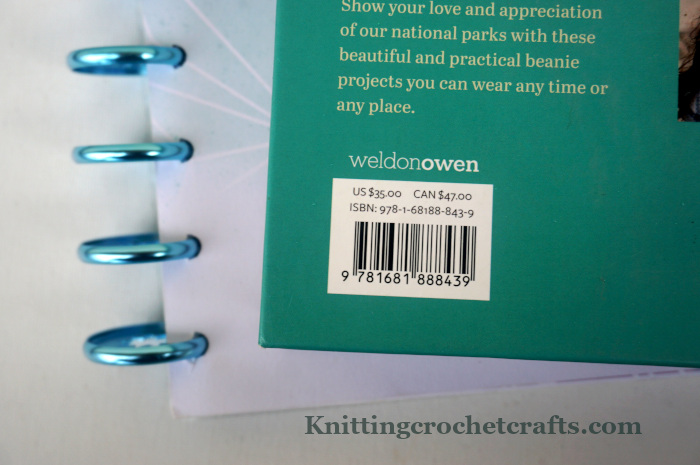
ISBN 13: 978-1681888439
ISBN 10: 1681888432
Book Formats:
This book is available in the following format(s):
- Hardcover without dust jacket
- Digital download: Kindle e-book edition (available instantly, with no shipping required!)
Number of Pages: 272
Topics Covered in This Book:
- US National Parks: The author mentions each park and what's special about it, plus she briefly explains how each design relates to each park's landscapes.
- Hat knitting patterns
- Choosing yarn
- Gauge and sizing
- Casting on
- Wet blocking a hat
- More!
Recommended Knitting Skill Level: This book is not ideal for beginners because the majority of these patterns require you to have skill with the stranded color knitting technique. Some also incorporate cables, bobbles or embroidery. I'd recommend the book to intermediate and advanced knitters.
The Focus of This Book:
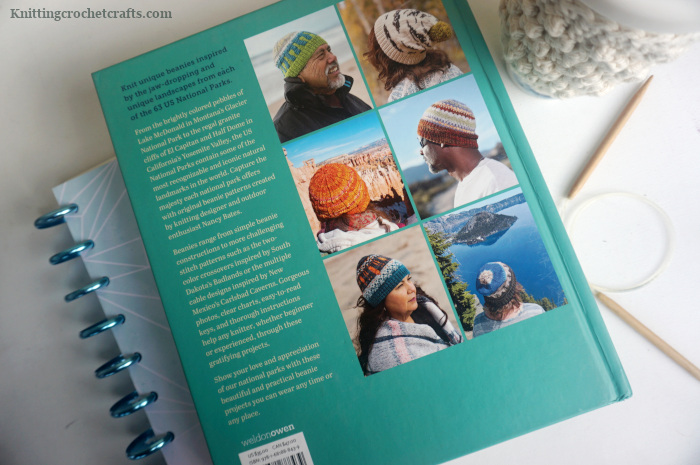
This book gives you 63 different beanie knitting patterns. These creative hat designs were all inspired by the USA's spectacular national parks.
I counted...
- A total of 6 solid-colored hats (by that, I mean that only one yarn color is specified -- but you could use a multicolored or heathered yarn for that one color, so your finished hat might not turn out to be one solid color, depending on your yarn choice.)
- A total of 6 different hat patterns that include bobbles.
- A total of 8 different hat patterns that incorporate cables (Or at least, that require you to have a cable needle.)
- 1 lace knitting pattern
- A total of 6 different hat patterns that are finished using various embroidery stitches.
- At least 8 patterns that are finished with duplicate stitch.
I could have counted wrong, so please take the above as estimates rather than set-in-stone fact.
Also, please keep in mind that some of these designs incorporate multiple features from the list above; for example, the Joshua Tree hat pattern is a solid-colored design that incorporates both cables and bobbles.
All the designs except the solid-colored ones are stranded color knitting patterns.
Examples of Knitting Projects Included in This Book:
The Big Bend Beanie (Texas)
This hat is one of my favorite projects from the book for several reasons:
- It totally nails the look of Texas' state flower, the Bluebonnet.
- It's super pretty without being froo-froo;
- The colors and design are utterly wearable, and would blend well into many peoples' wardrobes; in the photograph, the model is wearing it with a denim jacket, but there are many other ways you could style it.
Carlsbad Caverns (New Mexico)
This is one of the few solid-colored hats presented in the book. The rich-looking design incorporates intriguing cables that have a timeless, classic appeal about them.
I haven't knitted any of these hat patterns yet, but out of all the projects in the book, this is the one I'm likeliest to make.
Haleakala (Hawaii)
This dramatic hat captures the mood of East Maui's tallest volcanic peak.
This is not a complete list of all the beanie patterns you'll find in this book!
The Best Things About This Book:
I think Knitting the National Parks is super inspiring! The color photos of the national parks are incredibly beautiful. Bates did an amazing job of evoking each park’s landscape using yarn, texture and color.
The design work on these pages is compelling and creative. Each hat is like a miniature work of abstract art.
I just spent several hours looking through editorial coverage of the most recent Fashion Week events, and looking at high-end designers’ websites to check out their current offerings. The current hat trends include fitted beanies, berets, bucket hats, pillbox hats and shapkas – so this book’s beanie collection is right in style.
The project photography is well done.
For the majority of these projects, the hat shown on a human head and is also photographed laid flat. However, there are some designs that don't stick to this format.
The hat models are all real people, not mannequins. They are all relatable humans, not super models. Leafing through these pages, I feel confident that I am looking at honest photography, and this brings me great joy.
Another thing I LOVE about this book: Some of the suggested yarns for these projects are from super talented indie dyers.
That has tradeoffs, because hand dyed yarns tend to be more expensive than yarns that are commercially mass produced by corporate businesses.
However, I noticed that some of the yarn dyers are selling kits for these hats on their websites, and the kits I found were surprisingly affordable. So, if you decide to buy this book, I recommend looking around at the yarn makers' websites to see if you can find a kit for the hat you want to make. I can't promise you'll be able to find a kit for every hat, but there were many kits available when I looked just now.
Not all these patterns feature hand-dyed yarn; some of the suggested yarns are mass-produced by manufacturers including Lion Brand and Malabrigo.
The book includes both a detailed table of contents and an index, which are helpful for pointing you right to the national park and corresponding hat pattern that you want to look up.
Things to Be Aware of Before You Buy This Book
This book only includes patterns for beanies.
- No scarves.
- No mittens. No fingerless gloves.
- No socks.
- No sweaters.
- No blankets.
- No berets. No shapkas. No bucket hats. No balaclavas. No hoods. No headbands.
Just beanies! That.Is.IT!
So if beanie patterns are what you want to knit right now, this is your happy day! You just hit the jackpot!
But if you were hoping to mix it up a little, and knit a bunch of different types of projects, you’ll need to either buy a different book, or buy this book PLUS a different book.
If you don’t enjoy knitting from charts, this might not be the right book for you. The book does include options for solid-colored hats, but the vast majority of the patterns are charted designs.
Many of these patterns are knitted using worsted weight superwash wool yarn.
Worsted weight wool makes lovely, warm hats – and especially so when you knit them using the stranded colorwork technique, which is the technique you'll be using to knit many (although not all) of these hat designs. This is ideal if you’re planning to wear your new hats in the coldest months of a Canadian winter, but it’s maybe not what you need right now if you’re planning to spend the rest of your winter in Key West.
Some of these beanies are fitted, and some of them are a bit slouchy (not dramatically slouchy, but noticeably slouchy.) Slouchy beanies were a thing a few years ago, but the USA's top trendsetters have mostly moved away from wearing that slouchy style. There are still people wearing slouchy hats around, but overall, that hat style is now trending down.
Maybe you don't care about fashion trends (a lot of people don't!). So if you don't, obviously, no need to worry about that.
But if you do care about fashion trends, I'd advise you to stick with knitting the fitted beanies from this book, rather than the slouchy ones, so that you can maximize your hats' lifespan.
(But do keep in mind that fashion is cyclical, so sooner or later, the slouchy designs will be back in style again. But you might have to wait another 20 years for that.)
Some of these designs have floats that are longer than what I want to deal with. Your mileage may vary.
A few of the sample projects are pictured with pompoms, but I didn't find any pompom making instructions included in the book.
The words "Go on adventures!" are repeated in the instructions for every hat pattern. The first time I read that, I found it a little amusing. By the seventh time I read it, I started to ponder if there couldn't have been a better use for the space those repeated words take up in the book. By the twentieth time I read it, I was annoyed.
But maybe I'm the only one who will even notice this. I actually read the books I review, but I'm thinking most knitters won't read the entire text of this book. So perhaps it's a non-issue for most people.
Really, in the scheme of things, this is a minor annoyance -- but since this is a book review, I feel compelled to give you the nitty gritty details, even the minor ones.
Conclusion
I'm delighted to recommend this book to other knitting enthusiasts, particularly to intermediate and advanced-level knitters who enjoy working from charts and have mastered the stranded color knitting technique (or at least, to knitters who are willing to learn this technique.)
Where to Buy This Book:
- Click here to shop for this book at Amazon.
- Click here to download the Kindle e-book edition of Knitting the National Parks.
Thanks for checking out this book review of Knitting the National Parks. I appreciate your interest!
If you enjoy knitting, I invite you to return to this site often; I don’t want you to miss out on seeing future knitting book reviews, craft tutorials, project ideas and inspiration!
You can make sure you don’t lose track of this site by signing up for my newsletter and community at Substack.
Basic subscriptions are free; I send out regular newsletters to let my subscribers know about new craft articles and tutorials as they are posted. I also share details about the craft projects I'm working on, and invite my readers to share their projects, too. So there is no need to feel like it's just you, crafting all alone at home. I'd love to have you join us! You're invited!!
By Amy Solovay
Please Visit My Ko-Fi Shop HERE to Find My Sample Sale, Destash Sale and Digital PDF Pattern Downloads for Sale.

Find More Books About Knitting Hats and Other Fashion Accessories
Learn More About Knitting
Click here to find more of my top picks for 2026’s best knitting books.
Posted By: Amy Solovay
About Your Book Reviewer: Amy Solovay is a real person who has a background in textile design. She has been crocheting and crafting since childhood, and knitting since she was a teenager. She holds a degree in textile design from the Fashion Institute of Design and Merchandising and is a former instructor at California Design College, where she taught surface design and trend forecasting classes to fashion design majors. Amy worked in the textile industry for about a decade; during that time, she held various job titles ranging from circular knit designer to director of design. She then transitioned to a career in freelance writing.
This page was last updated on 12-25-2025.